
When purchasing aluminum alloy windows and doors, have you ever paid attention to how to choose the right glass? In fact, glass accounts for more than 70% of the total area of windows. It not only determines the performance of sound insulation, heat insulation, and safety but also directly affects the living comfort and quality of life. This article will guide you on how to select cost-effective and practical glass for aluminum alloy windows and doors from the aspects of basic glass types, thickness, and configuration.
1. Opt for Tempered Glass
Safety is of paramount importance when installing windows and doors. Among various types of glass, tempered glass is the first choice for basic glass.
Ordinary float glass has low strength and is difficult to withstand strong winds. It is fragile, and once broken, its sharp fragments can easily cause secondary injuries. Tempered glass, also known as strengthened glass, is 3-5 times stronger than ordinary glass. It has better impact resistance and wind pressure resistance. When broken, it forms small, obtuse-angled granular fragments, greatly reducing harm to the human body.
Every piece of qualified tempered glass is marked with a 3C certification. Consumers must check this clearly when making a purchase.
2. Select the Right Thickness
Is thicker glass necessarily better in terms of sound insulation and safety? Actually, that’s not the case. The thickness of the glass should be scientifically determined based on the actual size of the window. If it is too thin, it cannot resist impacts and strong winds. If it is too thick, it will increase the load on the hardware, affecting the lifespan of the window sash.
You can use the following formula to calculate the appropriate glass thickness: Glass thickness (mm) ≈ Single glass area (㎡) × 2. For example, a 2㎡ glass should be 4mm thick; a 3㎡ glass should be at least 6mm thick. This ensures basic wind pressure resistance and stability. For super-large floor-to-ceiling windows or high-rise residences, thicker glass or laminated glass should be customized based on wind pressure calculations.
Glass thickness should match the actual window size.
Thin glass lacks impact and wind resistance.
Thick glass burdens hardware and shortens sash life.
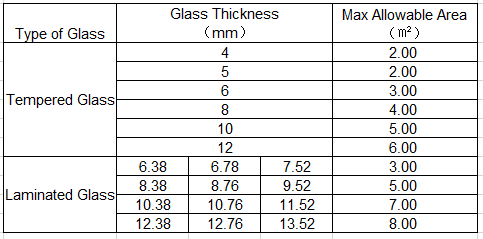
3. Choose the Appropriate Configuration
In the window and door market, merchants generally provide 5mm thick insulated glass as standard. This configuration is sufficient for most families. However, for special environments or needs, you may need to upgrade the glass configuration.
– For high sound insulation needs: Choose insulated laminated glass. It is suitable for homes near streets, elevated roads, or airports. The laminated layer effectively blocks medium and low-frequency noises (such as traffic and aircraft roar), while the insulated layer blocks medium and high-frequency noises.
– For high heat preservation and insulation needs: Choose insulated Low-E glass filled with argon. It is suitable for cold regions or families pursuing constant temperature throughout the year. Low-E glass reflects infrared rays, retaining indoor heat in winter and blocking external heat in summer, resulting in significant energy savings. Filling with argon further reduces heat conduction.
– For high safety needs: Choose laminated glass. It is suitable for large balconies, high-rise windows, stair corners, and large glass areas in children’s rooms. Even if laminated glass breaks, the fragments are held together by the PVB film in the middle, preventing them from falling and causing splash injuries.